The ROI of Gratitude: A Leader’s Guide to the Five Balls of Life
In 1991, Brian Dyson, then CEO of Coca-Cola, gave a now-famous commencement speech at Georgia Tech. In it, he shared an analogy that’s stuck with me ever since — one I often use in my own coaching and training:
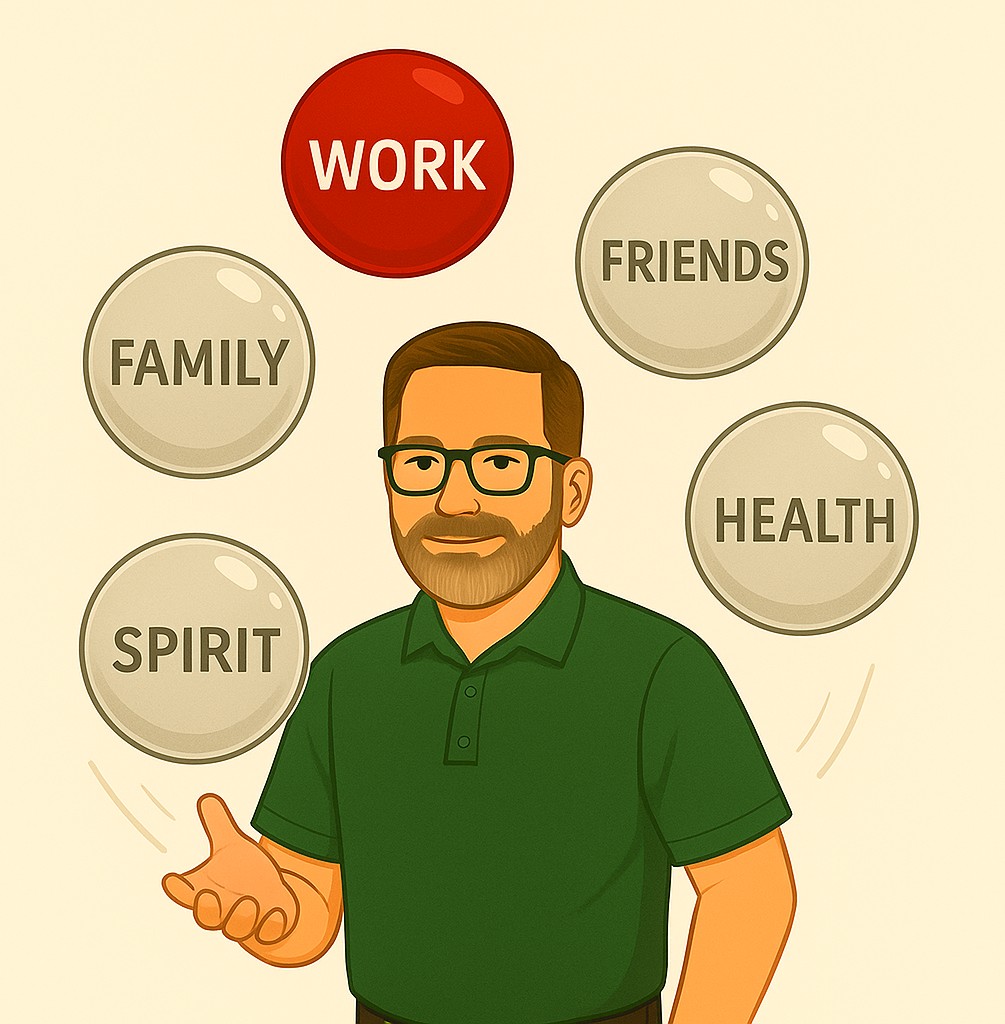
“Imagine life as a game in which you are juggling five balls. They are called work, family, health, friends, and spirit, and you’re keeping all of them in the air.
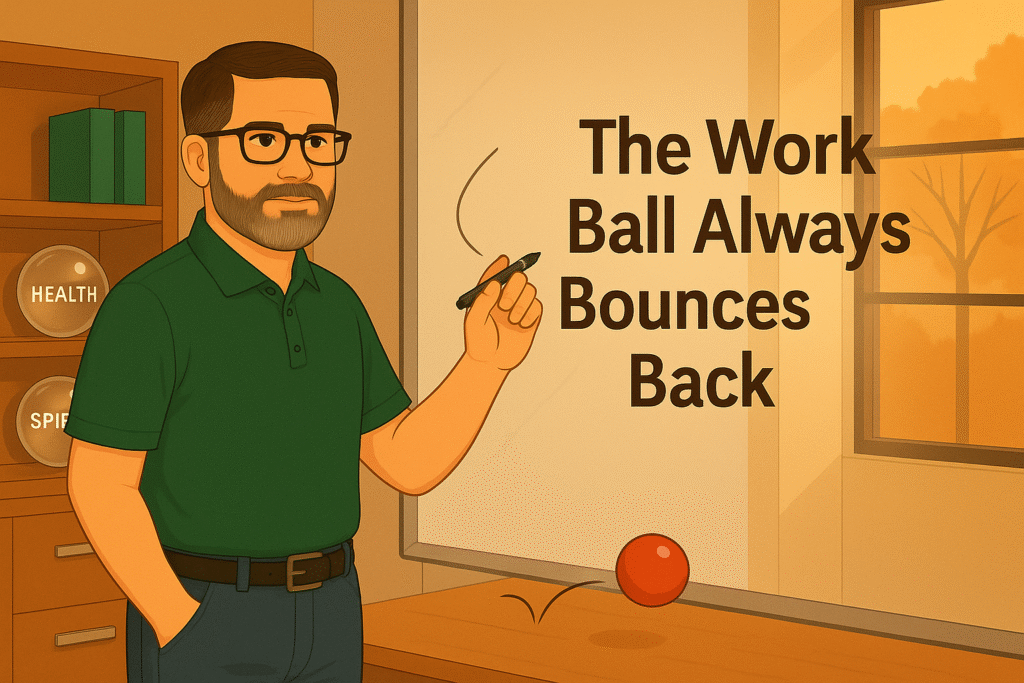
You will soon understand that work is a rubber ball. If you drop it, it will bounce back.
But the other four balls—family, health, friends, and spirit—are made of glass.
If you drop one of these, they will be irrevocably scuffed, nicked, or even shattered.
Understand that and strive for balance in your life. How?
Don’t undermine your worth by comparing yourself with others. It is because we are different that each of us is special.
Don’t set your goals by what other people deem important. Only you know what is best for you.
Don’t take for granted the things closest to your heart. Cling to them as you would to life itself, for without them, life is meaningless.
Don’t let your life slip through your fingers by living in the past or for the future. By living your life one day at a time, you live all the days of your life.
Don’t give up when you still have something to give. Nothing is really over until the moment you stop trying.
Don’t be afraid to admit that you are less than perfect. It is this fragile thread that binds us together.
Don’t be afraid to encounter risks. It is by taking chances that we learn how to be brave.
Don’t shut love out of your life by saying it’s impossible to find. The quickest way to receive love is to give love.
Don’t dismiss your dreams. To be without dreams is to be without hope.
Don’t run through life so fast that you forget not only where you’ve been, but also where you are going.
Life is not a race, but a journey to be savored each step of the way.”
That short speech holds more truth about leadership and life than most management books. It reminds us that gratitude — for work, family, friendship, health, and spirit — is what keeps the glass balls from shattering.
The Rubber Ball — Work and the Power of Perspective
Work often feels like the centerpiece of life. It demands our best hours, our focus, our creativity. But as Dyson said, work is the rubber ball. If we drop it, it bounces back.
Gratitude for work doesn’t mean being thankful for endless deadlines or late nights. It means appreciating the opportunity to contribute — to solve meaningful problems and add value through what we build or lead.
A few years ago, I learned this lesson firsthand. When I left my corporate position to move across the country for family health reasons, I was terrified my career was over. I’d spent decades building that role, and I feared the next chapter would be smaller or less impactful.
But thanks to colleagues and peers who believed in me, I quickly built a thriving consulting and coaching practice. I discovered not an ending, but a rebirth. That experience taught me to be grateful not just for work itself, but for the community and resilience that make new beginnings possible.
Work bounces back. Gratitude helps you see it for what it is — an opportunity, not your identity.
As leaders, showing gratitude for others’ contributions keeps our own perspective healthy. Recognition and encouragement are renewable forms of energy that multiply far beyond ourselves.
The Glass Ball of Family — Gratitude for Connection
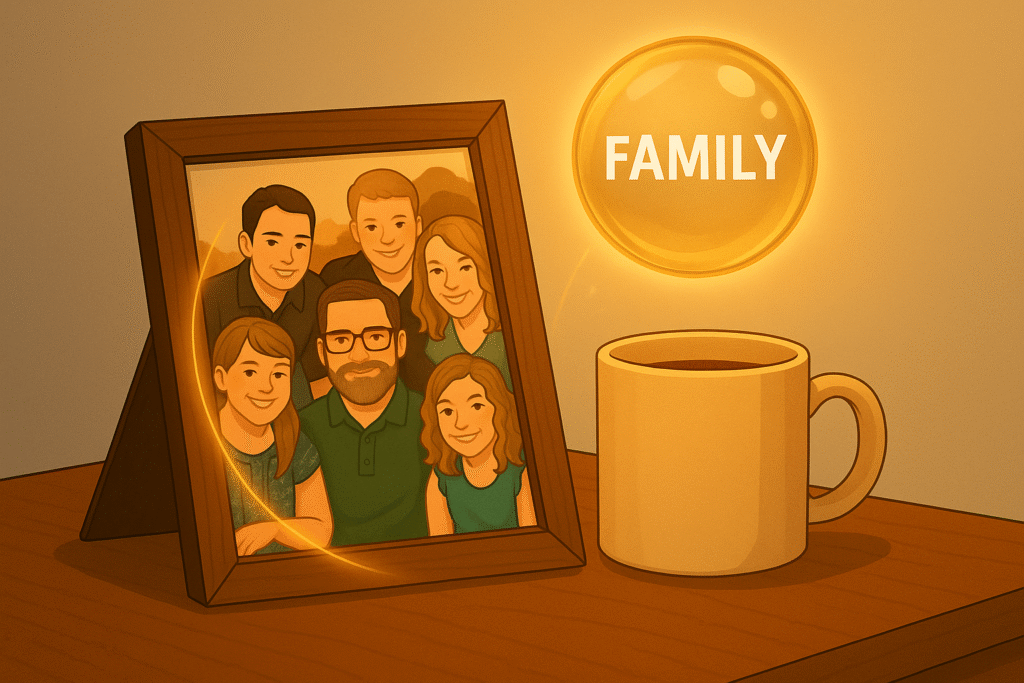
Family — however you define it — is the foundation we return to when everything else wobbles. Yet it’s often the first thing we neglect when work gets loud.
I’ll admit: I’m a typical engineer. A little introverted, a little OCD, a little ADHD, and a brain that sees in math instead of color — all wrapped into one slightly goofy package. Change isn’t my favorite thing.
Thankfully, my wife understands that about me better than anyone. She’s been my personal cheerleader through every reinvention — finishing my doctorate after my advisor left the university, navigating career transitions, and even my attempts at learning a new language.
She’s been my glass ball of stability — the one constant that grounds me when everything else is in motion. Gratitude for family isn’t about what they do for us. It’s about recognizing the grace they give us to stumble, grow, and keep trying.
And for leaders, gratitude for family extends beyond your own home. When you honor your team’s families — by respecting boundaries, encouraging balance, and showing understanding — you demonstrate that same gratitude in action.
The Glass Ball of Friends — Gratitude for Belonging
Friendship has always been the hardest of the five for me. I’ve spent most of my life deeply focused on work, learning, and family. There hasn’t always been much room left for cultivating friendships in the traditional sense.
But as I’ve gotten older, I’ve realized that friendship doesn’t always look like backyard barbecues or weekend getaways. Sometimes it’s the colleague who checks in after a long week. Sometimes it’s a former mentee who calls to ask for advice. Sometimes it’s the community that forms around shared purpose — people who believe in the same mission to help others grow.
Those connections are friendships. They may not fit the movie version, but they fill that same need for belonging and understanding.
Gratitude for friendship means acknowledging that we’re not meant to do this alone. Even as leaders, especially as leaders, we thrive in connection — with peers, clients, and communities who make us better.
Leadership is less about hierarchy and more about humanity. Gratitude for friends reminds us of that truth.
The Glass Ball of Health — Gratitude for Capacity

It’s easy to take health for granted — until it falters. Gratitude for health isn’t about pretending we’re invincible. It’s about appreciating what our bodies and minds allow us to do.
When I was working on my doctorate, I was teaching a full class load at the university, working part-time for a system integrator, and teaching night classes to technicians at a local research center — all while taking my own graduate courses.
It was too much. I burned out badly and became seriously ill, nearly ending up hospitalized. That experience forced me to see that working 100-hour weeks doesn’t make you stronger — it makes you fragile.
Now, I’m grateful not just when I feel healthy, but for the capacity to think clearly, to recover, and to create. For leaders, gratitude for health means modeling balance. Taking care of yourself isn’t indulgence — it’s stewardship.
The Glass Ball of Spirit — Gratitude for Meaning
Spirit means something different to everyone — faith, purpose, values, or simply the quiet moments that reconnect you with meaning.
One of my long-time clients exemplifies this perfectly. He runs his company on the principles of servant leadership — and he lives those principles daily. He treats employees, customers, and even competitors with humility, respect, and compassion.
Watching him reminds me that gratitude for spirit isn’t abstract — it’s behavioral. It’s about aligning what we believe with how we lead. When we do that, work becomes more than output. It becomes contribution.
Gratitude for spirit is gratitude for meaning — and meaning is what turns success into significance.
The ROI of Gratitude
Gratitude doesn’t cost anything. But its return on investment is extraordinary.
It improves health and focus. It strengthens relationships and builds trust. It increases engagement and retention. And it restores perspective — helping us see which balls are glass and which will bounce.
When gratitude becomes part of how we lead, it multiplies through our teams, our families, and our communities. It becomes the culture, not the afterthought.
If this message resonates with you and you’d like to take a few quiet minutes to reflect on your own five balls, I’ve created a short, guided worksheet to help you do just that.
The Five Balls Gratitude Reflection Tool walks you through each area — Work, Family, Friends, Health, and Spirit — with thoughtful prompts to help you recognize what’s working, where you might need more care, and how gratitude can guide your next steps. You can download your copy here:
Looping Back to Dyson
Dyson’s message wasn’t about juggling faster — it was about juggling wiser. He reminded us that success without gratitude isn’t balance; it’s motion without meaning.
Work will bounce back. But the others may not.
Gratitude is what reminds us which ball we’re holding — and how fragile it really is.
A Final Word of Thanks
Before I close, I want to say thank you.
To every reader, client, colleague, and friend who has supported me in this journey — your encouragement and engagement make all of this possible.
Whether you’ve shared a post, joined a session, or simply taken an idea back to your team, you’ve been part of the reason I get to do what I love.
Your support allows me to keep helping others grow, lead, and find balance in their own five-ball juggle. And for that, I’m profoundly grateful.
Coming Next Month: Harvesting Lessons Learned We’ll turn reflection into strategy — how to capture this year’s insights and use them to build a stronger, more focused 2026.